Byrnn Jones is a Who What Wear editor in residence, and the founder/curator of Aralda Vintage, a boutique and archive based in Los Angeles.
Not a day goes by that I don’t think about vintage and antiques. My brain feels like it’s organized into compartments dedicated to different genres and categories within this colossal world of old, beautiful things. There’s the part on high alert for my business—always scanning for which collector’s pieces I want to buy for my store, what’s worth the investment, and how the value might grow in the future. Then there’s the personal section, dog-eared like a well-worn book, filled with the pieces I “need” to complete me—whether that’s an antique picture frame in the exact right size for my gallery wall, or a pair of vintage jeans that fit just a little better than the 20 pairs I already can’t let go of. And then there’s my favorite zone: the sparkling, blank canvas. This is where I give myself permission to wander shops with no intention at all, just waiting for clothes and tchotchkes to speak to me.
I’ve always had an affinity for small businesses, partly for their individuality and partly for the charm that radiates from them. Growing up in Portland, Oregon, in the 90s left a romanticized imprint on me—an eternal nostalgia-shaped divot that will never be fully filled. My favorite pastime as a kid was going downtown to window shop. Each store had its own energy, with different smells, sounds, and textures. If I close my eyes, I’m back there again: velvet robes, antique jewelry, Edwardian nightgowns, handmade ceramics, all marinating in the scent of Nag Champa incense. My happy place has always been a small shop filled to the brim with stuff.
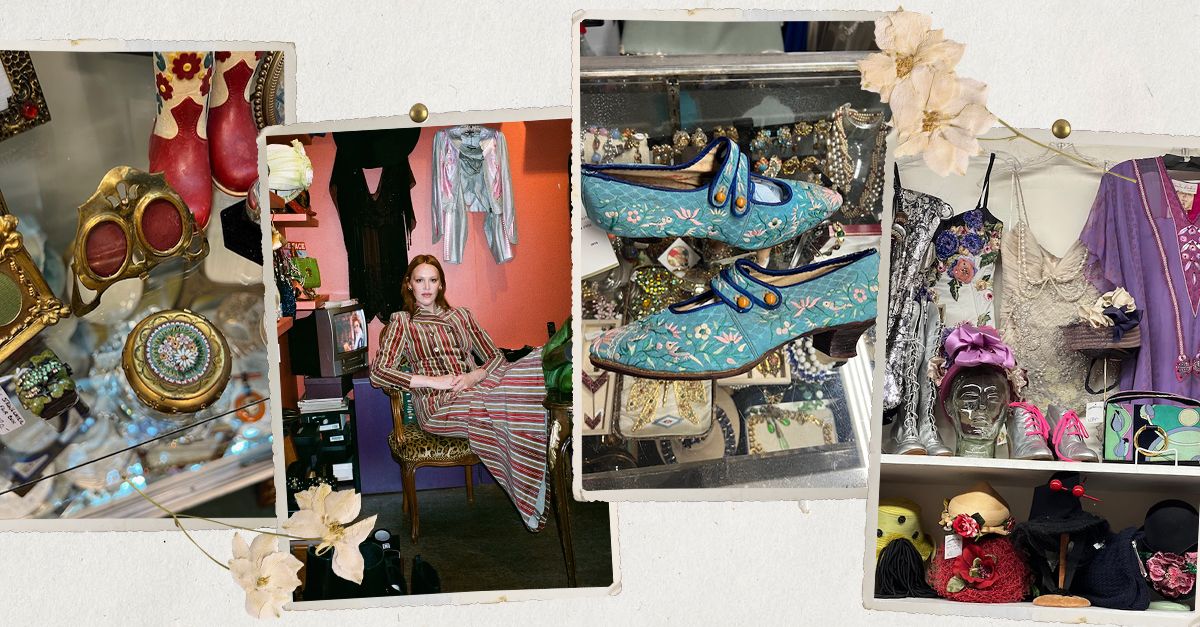
Running a vintage shop is a constant outpouring of passion—the endless stream of sourcing and caretaking is a true labor of love. For the customer, shopping in person provides a joy that online browsing never can. It’s the experience of seeing how a shopkeeper chooses to merchandise, of touching and trying things on, chatting with the person behind the counter while their handpicked soundtrack plays. A vintage store is not just a place that sells old things—it’s a creative expression, and an intimate way to connect with people, places, and time itself.

Brynn Jones at her boutique, Aralda Vintage
Los Angeles is filled with countless vintage and antique shops, and on my most recent day off, I spent the day visiting a few of my favorites.
Sherman Oaks Antique Mall

(Image credit: Courtesy of Brynn Jones)
My first stop was my beloved old haunt, the Sherman Oaks Antique Mall. I’ve been coming here for at least a decade, and it remains a treasure trove. If you love the thrill of the hunt, this is the place. Each vendor specializes in something different—clothes, jewelry, home goods, picture frames—and you never know what you’ll come across. I usually leave with antique jewelry or home goods, but this time I also came home with a purple feather cape, some crystals for my son’s 6th birthday, and cufflinks for my husband’s birthday. I finally even found two small frames to hang side by side, now holding photos of my kids.
Moth Food

(Image credit: Courtesy of Brynn Jones)
As I mentioned, I have an ever-growing stack of vintage denim, much of it thrifted over years of traveling around America. That’s my biggest hack: whenever you’re in a small town, check the local thrift store—you might just find the perfect pair of jeans. But if you live in Los Angeles and don’t have time to road-trip, visit Moth Food in Eagle Rock. They’ve done the work for you, combing through endless racks and tagging each pair of jeans by size and style. In addition to denim, you’ll find everyday essentials: tees, jackets, sweatshirts—even antique pieces, like the white romper I tried on there. These are the kinds of clothes you wear daily, the ones you pull from the dryer and put right back on. And while you’re not paying thrift store prices, you’re paying for the time, vision, and diligence it takes to find and curate pieces like these.
Shop Vintage Pieces From Moth Food

Vintage
60s Russell Navy Blue Boys tee

Levis
70s/80s Straight Leg Orange Tab 28w

Vintage
90s Hard Wear Tee
Canonball and Tilly

(Image credit: Courtesy of Brynn Jones)
I ended my day at the quintessential vintage dream: Cannonball & Tilly. It’s a shop where you can revel in turn-of-the-century dresses, 1960s jewelry, and a perfectly nostalgic 90s playlist. I probably tried on 15 pieces and almost every song playing through the speakers sparked a memory from years past. This is peak vintage shopping for a nostalgia junkie like me. Their inventory is playful and fun—exactly what I seek in the great escape that is vintage shopping. My self-control unraveled here, and I ended up indulging a little. But the beauty is, you can do that here without breaking the bank. This is the place to go when you need something for a special occasion, or simply a mood boost—a way to fill your cup without draining your bank account.
Shop Vintage Pieces from Cannonball and Tilly

Vintage
30’s Peach Organdy Dress With Ruffle Collar and Bow

Y2k Vintage
Deadstock Mandalay Halter Corset Top

Vintage
Buttery Soft Tan Suede Skirt
Explore More: